
Let’s Talk About Protein: The Ultimate Body-Builder
After exploring the magic of healthy fats, it’s time to talk about another absolute powerhouse of nutrition: Protein.
Why do we need it? Let’s skip the boring biochemistry lecture about molecular synthesis. Here’s the short, real-world version:
When you eat a juicy steak, a block of tofu, or a scoop of cottage cheese, your body breaks those complex proteins down into tiny building blocks called amino acids and short peptides.
Think of them like Lego bricks. Your stomach and small intestine handle the demolition job, and boom—those bricks are ready to build new things. (Fun fact: short peptides absorb faster than free-form amino acids, which is good to know if you ever use supplements!)
Once absorbed, these amino acids get straight to work:
They fuel your energy.
They craft brand-new hormones and digestive enzymes.
They head to the liver, which acts like a smart distribution center—making plasma proteins (like albumin) or creatine, burning them for energy when needed, and sending the rest out into your bloodstream to feed the rest of your cells.
From muscle tissue and skin to neurotransmitters and your immune system, your body relies on this amino acid pool 24/7.
Where Do We Find It?
Here’s the catch: unlike carbs and fat, your body can't store protein for later. That means you need a fresh supply regularly.
Just like there’s no single "best" diet, there’s no single "best" protein source. Amino acids come in three flavors:
Non-essential: Your body makes these on its own.
Essential (EAAs): Your body can’t make these, so you have to eat them.
Conditionally essential: Your body makes them, but struggles when you're sick or stressed. Eating extra helps you heal!
The secret? Keep your protein diverse. Eat a wide rainbow of whole, minimally processed foods to get a balanced mix of essential amino acids.
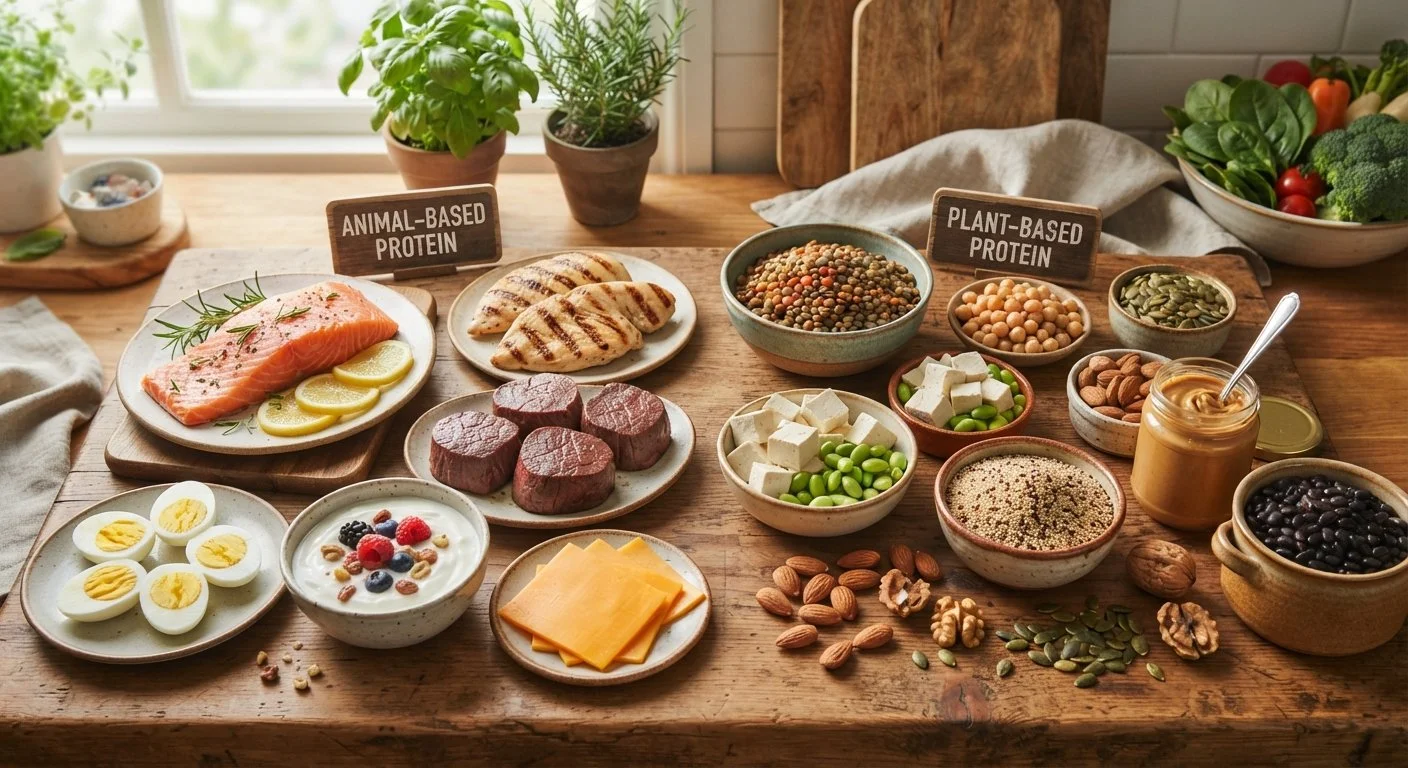
The secret? Keep your protein diverse.
Eat a wide rainbow of whole, minimally processed foods to get a balanced mix of essential amino acids.
Animal power: Beef, lamb, chicken, fish, eggs, cottage cheese, Greek yogurt.
Plant power: Beans, tofu, tempeh.
Supplements: Protein powders (not my favorite, but totally fine if you need to plug a nutritional gap!).
How Much Do You Actually Need?
Lately, the food industry has gone completely protein-crazy—you can literally buy protein-infused water now! (If you follow the New York Times, you’ve probably seen the stats on ultra-processed foods pushing unnecessary protein levels sky-high).
Spoiler alert: Most of us think we aren't eating enough protein, when in reality, we're probably eating plenty.
Most of us are sedentary omnivores—meaning we don't move a ton, we eat dairy and meat, and we don't need a bodybuilder's mountain of protein just to get through the day.
Let’s break down your daily protein sweet spot based on your lifestyle (shoutout to the Precision Nutrition framework):
Sedentary: 0.8 to 1.2 grams per kg of body weight daily. (Drop below 0.8 and you're entering malnutrition territory).
Active (Overweight): 1.2 to 1.6 grams per kg daily.
Active (Healthy Weight): 1.6 to 2.2 grams per kg daily.
Active & Transforming Body Composition: 1.6 to 3.3 grams per kg daily.
Example: I weigh 55 kg and I am active. Staying on a conservative side, my math looks like this:
1.2 times 55 = 66 grams of protein a day. Spread that across 3 meals, and that’s about 22 grams per meal!
Back to Basics: The Hand-Size Rule
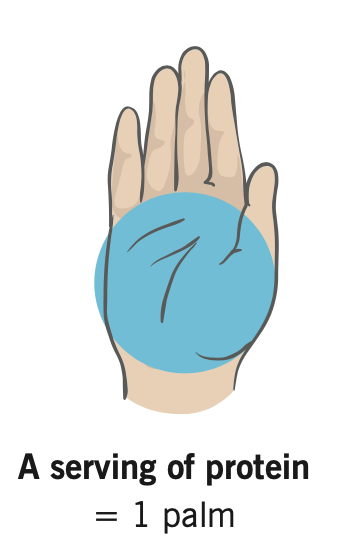
The easiest measuring tool you'll ever need is the palm of your hand:
Aim for 1 to 2 palm-sized portions of high-protein foods per meal.
Super active? Bump it up to 2–3 palms, or space your meals out. (Protein keeps you full longer, which is great, but cramming too much into one sitting can feel like a brick in your stomach).
One quick health note: If you have pre-existing conditions, such as kidney or liver disease, you might need a lower-protein diet. Always chat with your healthcare provider before shaking up your nutrition routine!
