
Fats: The Unsung Heroes of Our Health
Forget everything you’ve been taught about fearing fat. It isn’t the enemy—it’s actually an essential fuel source and structural building block for a thriving body. The secret isn’t cutting fat out; it’s choosing the right mix from whole, real foods.
What Fats Actually Do for You
Fats work hard behind the scenes to keep you running smoothly:
Sustained Energy: They provide dense, long-lasting fuel.
Brain & Nerve Power: Your brain is mostly fat! Healthy fats build strong cell membranes and nervous system pathways.
Hormone Balance: Your body relies on fats and cholesterol to create key hormones like estrogen and testosterone.
Nutrient Delivery: Vitamins A, D, E, and K are fat-soluble, meaning your body can't absorb them without fat present.
Essential Fatty Acids: They deliver Omega-3s and Omega-6s—vital fats your body cannot make on its own.
The Fat Spectrum: What’s on Your Plate?
1. Saturated Fats (Enjoy in Balance)
Found in: Beef, pork, butter, cheese, eggs, coconut, and cacao.
The Truth: Saturated fat has gotten a bad reputation over the years due to cholesterol fears. Science teach us that only a small amount of blood cholesterol comes from the food you eat—your liver makes the most of it. Saturated fats aren't inherently "bad," but they are easy to overconsume, especially when paired with refined carbs and sugars. Keep them as part of a varied diet, not the main event.
2. Polyunsaturated Fats (PUFAs)
Omega-3s (The Calm): Anti-inflammatory fats that support brain function and cellular health. Get them from cold-water fish (salmon, sardines), algae, flaxseeds, chia seeds, and walnuts.
Omega-6s (The Spark): Pro-inflammatory fats that are essential for healing injuries and recovering from workouts, for example. Found in seeds, nuts, and poultry.
The Goal: A healthy balance between the two by eating diverse, whole foods.
3. Monounsaturated Fats (MUFAs - The All-Stars)
Found in: Extra virgin olive oil, olives, avocados, and nuts.
The Truth: Heart-healthy and gentle on digestion, these plant-based fats are widely considered the gold standard for daily intake.
4. Trans Fats & Heavily Processed Oils (Minimize or Avoid)
The Problem: Industrially engineered trans fats and heavily refined seed oils are designed for long shelf lives, not long human lives. Reheating oils to extreme temperatures (like deep-frying) causes oxidation, producing unwanted chemical byproducts that trigger gut and systemic inflammation.
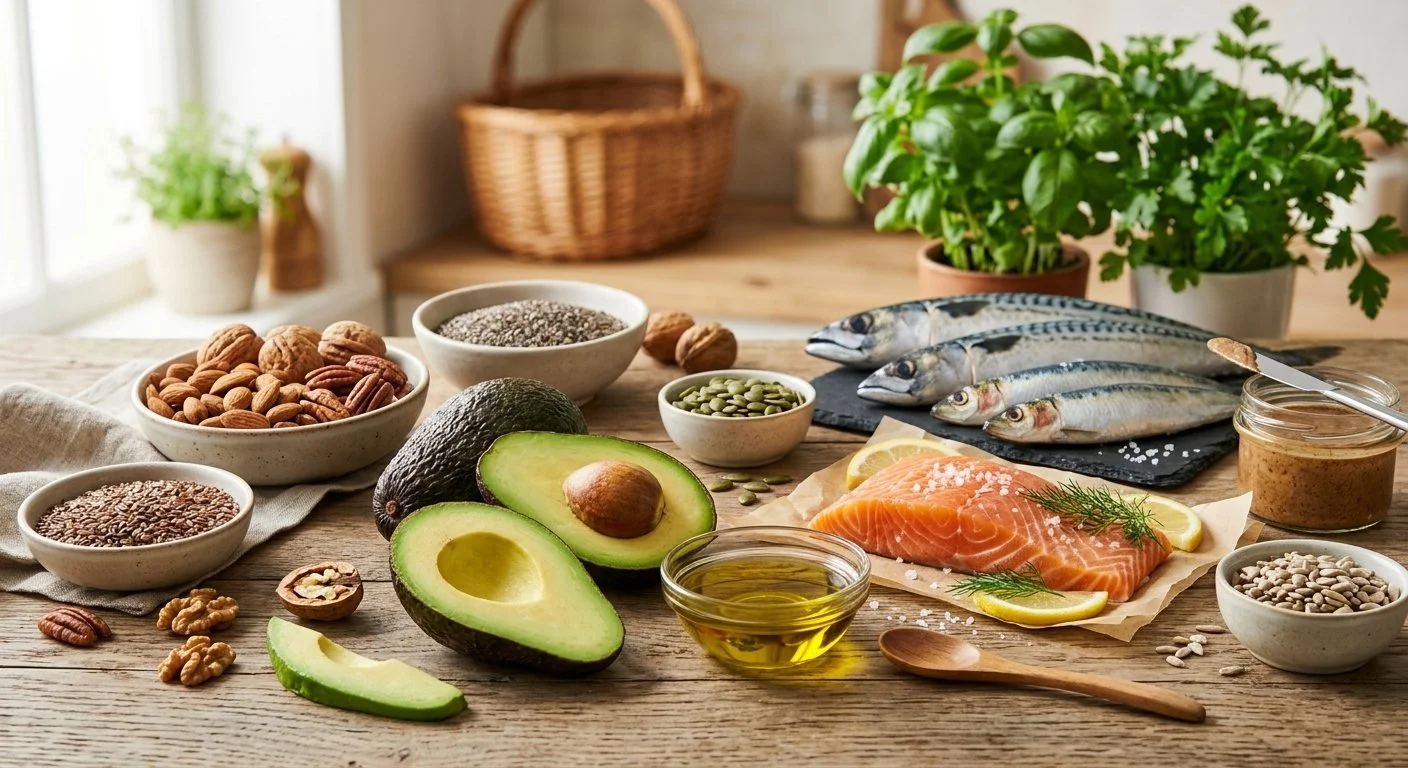
Simple Guide to Sources
Monounsaturated
Extra virgin olive oil, avocados, olives, almonds, macadamias
Omega-3 Rich
Wild-caught fatty fish, chia seeds, flaxseeds, hemp seeds, walnuts
Saturated
Grass-fed meats, pastured eggs, full-fat dairy, coconut, dark chocolate

How Much Do You Need?
Because fats are energy-dense—providing more than double the calories per gram compared to protein or carbs—a little goes a long way.
A standard rule of thumb for most meals? Literally, use your thumb. One or two thumb-sized portion of healthy fats per meal is usually all it takes to keep your body nourished and full without overloading your digestive system.
Focus on getting your fats from whole, minimally processed sources, cook with heat-stable options like refined avocado oil when necessary, and enjoy the variety real food provides!
(picture from PN)