
Have you ever chewed a piece of plain bread, pasta, or rice really, really slowly? If you have the patience to keep chewing past the point where you’d normally swallow, you’ll notice something surprising: it starts tasting sweet.
That’s not your imagination—it’s basic chemistry in action. Digestion actually starts right in your mouth, where enzymes in your saliva begin breaking complex carbohydrates down into simple sugars. Whether you eat a bowl of oatmeal, a crisp apple, or a spoonful of table sugar, your body’s ultimate goal is to break those molecules down into glucose.
And before you panic at the word "sugar," take a breath. That doesn’t make carbs unhealthy. In fact, glucose is your body's favorite fuel. Your brain, red blood cells, and working muscles rely heavily on it just to keep the lights on. (And if you cut carbs completely—like on a keto diet—your body actually has to work overtime to manufacture its own glucose out of proteins and fats just to survive!)
Not All Carbs Act the Same
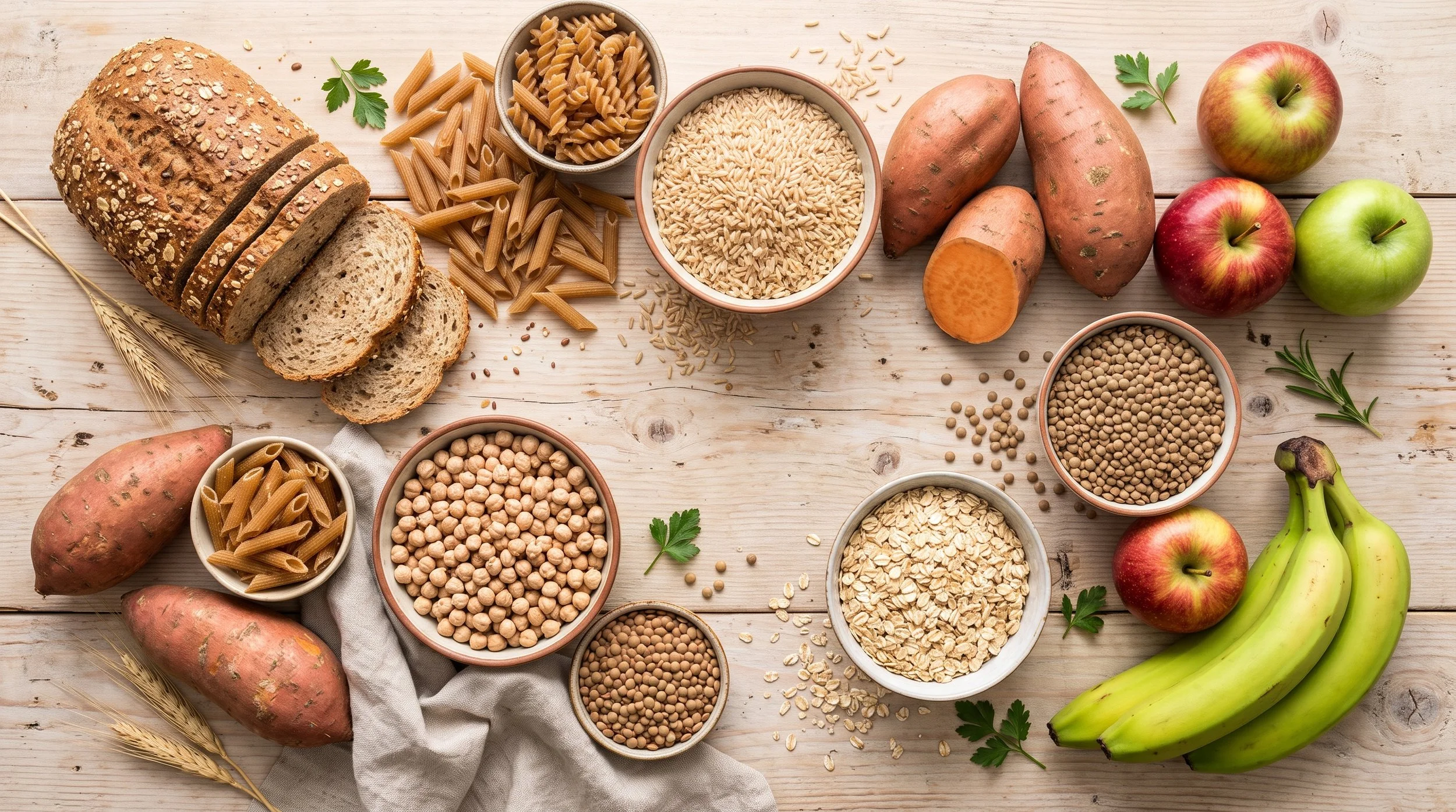
When most people hear "carbs," they immediately picture bread and pasta. While grains are definitely on the list, carbohydrates actually wear a few different outfits:
The Protein-Packed Carbs (Legumes): Beans, chickpeas, and lentils are a nutritional two-for-one. They’re loaded with carbs and protein—which is why pairing a big serving of beans with a steak and a dinner roll can quickly push a meal into overload.
The Gut-Friendly Carbs (Fiber): Vegetables are full of complex carbs called fiber (both soluble and insoluble). Your digestive system can’t actually break fiber down, so it travels straight to your gut where your beneficial bacteria throw a feast. Fermenting that fiber keeps you full longer, helps lower cholesterol, and keeps everything moving smoothly through your digestive tract.
Starches (& Resistant Starch): Starchy veggies like potatoes give you steady, digestible energy. However, certain foods—like green bananas, beans, or cooked-and-cooled potatoes, rice, oats, and pasta—contain resistant starch. Cooling these cooked starches rearranges their molecules so they resist digestion, acting just like fiber. Yes, this officially means your leftover pasta salad has a built-in health perk!
Where Does It All Go?
Once carbs leave your mouth and finish breaking down in your small intestine, glucose enters your bloodstream and heads to your liver. From there, your body either uses it immediately for energy, stores it in your muscles and liver for later, or—if you’re consistently eating more energy than you burn—converts the excess into fat.
A quick detour on fructose: Fructose (the sugar found naturally in fruit and added to many processed sweets) doesn't spike your blood sugar right away because it goes straight to the liver to be processed. Whole fruit comes packaged with fiber and water, making it great for you. However, flooding your liver with concentrated fructose (like sugary sodas or syrups) can cause the excess to be converted into triglycerides (blood fats). As always, dose and source matter.
Should You Worry About the Glycemic Index?
If you’ve ever fallen down a nutrition rabbit hole, you’ve probably seen charts for the Glycemic Index (how fast a food raises blood sugar), Glycemic Load (how much a specific serving raises blood sugar), and the Insulin Index (how much insulin your body releases in response to any food, even zero-carb ones like steak or eggs).
Here’s the honest truth: unless you are managing a specific medical condition with a registered dietitian or doctor, you don't need to eat by a spreadsheet.
These numbers measure foods eaten in isolation on an empty stomach. In real life, we eat mixed meals! Adding protein, healthy fats, and fiber to your plate naturally slows down digestion and lowers the blood sugar spike of whatever you're eating. Plus, chasing low-GI numbers blindly can backfire—high-fructose junk foods can technically score low on the Glycemic Index while still being terrible for your health.
How Much Do You Actually Need?
Because there is no single "best" diet, your ideal carb intake depends on your age, how much you move, how hard you train, and what foods you actually enjoy.
Instead of pulling out a food scale, start with quality: build your meals around whole, minimally processed, seasonal foods like fruits, root vegetables, whole grains, and legumes.
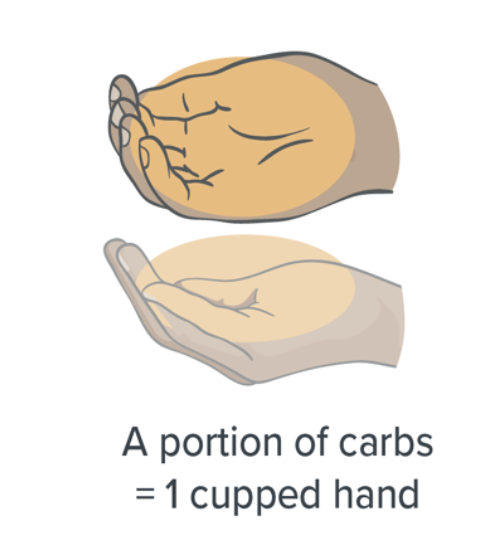
For portioning, use the easiest measuring tool you own—your hands:
Aim for 1 to 2 cupped handfuls of quality carbs per meal (leaning toward 1 if you’re less active, and 2 if you’re burning a lot of energy).
Wrapping Up the Macros
That brings us to the end of our macronutrient series! By pairing smart portions of carbs with protein and healthy fats, you give your body everything it needs to feel energized—without feeling starved or overly stuffed.
Will every meal be textbook-perfect? Of course not. Aim for balance about 80% of the time, and let life happen the other 20%.
Learning to fuel your body is a lot like practicing a tennis serve. At first, you’re overthinking your footwork, your grip, your shoulder turn, and where you’re standing on the court. It feels clunky. You adjust a little here, tweak a little there, and put in the reps. Over time, those small, consistent adjustments become second nature—and suddenly, you’re playing a much better game.
